
Parental Alienation Manipulation: How It Works

Parental alienation manipulation is a set of psychological tactics one parent uses to reshape a child’s feelings and memories about the other parent. It works through emotion, repetition, and loyalty pressure rather than argument. Here is how the process works inside a child’s mind, and where it does not apply.
Parental Alienation Statistics: What the Data Shows

Parental alienation statistics vary widely by study and method. Bernet’s estimate is near 1 percent of US children; Harman’s polls put moderate-to-severe alienation at 1.3 percent or more. This page explains the major estimates, why they differ, and what the data does and does not show.
Parental Alienation Stories: What They Teach

Parental alienation stories from adult children and rejected parents tend to follow one arc: a warm bond, a campaign of denigration, rupture, and for some a slow repair. Read as testimony, they reveal how alienation works from the inside and where realistic hope lives.
Parental Alienation Syndrome vs. Parental Alienation
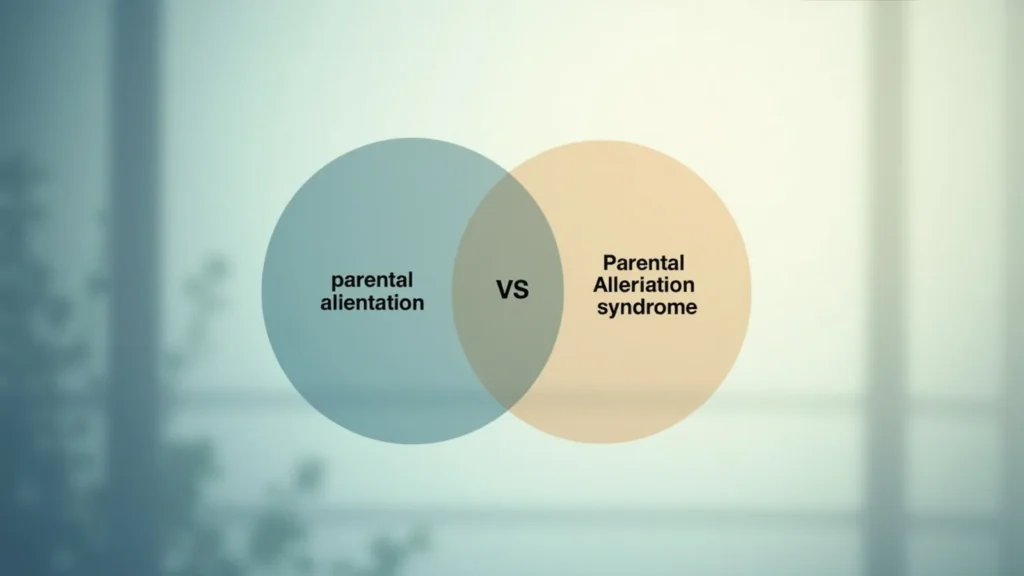
Parental alienation syndrome (PAS) names the symptoms in the child. Parental alienation (PA) names the behaviors by the parent. Gardner introduced PAS in 1985. The DSM-5 never accepted it. Modern practice favors parental alienating behaviors (PAB) and child psychological abuse. Here is the plain-English difference.
Parental Alienation in Teenagers Explained

Parental alienation in teenagers is when one parent’s influence drives a teen to reject the other without good reason. It can look like normal independence. This guide explains how to tell alienation from healthy teenage autonomy and justified estrangement, and the calm posture that helps.
Parental Alienation Trauma and the Developing Brain

Parental alienation trauma is the toxic stress a child absorbs when one parent’s chronic pressure turns them against the other. It works like an adverse childhood experience on the developing brain. This guide explains the mechanism, the identity injury, and why recovery is possible though outcomes vary.
Parental Alienation and Visitation Explained

Parental alienation and visitation are closely linked, because parenting time is often where alienation first shows. One parent may withhold visits, sabotage exchanges, or reframe the other parent as unsafe. Still, not every resisted visit is alienation. Learn how the concept works and how to tell it from reluctance.
Parental Alienation in Young Children: A Developmental Guide

Parental alienation looks different before age five. The classic campaign of denigration is built from older children’s cases. In infants, toddlers, and preschoolers, the dynamic shows up earlier in the chain: blocked contact, disrupted attachment, and a bond prevented from forming. Here is the developmental picture, without overclaiming.
Rejected Parent Syndrome: Meaning, Impact, and Help

Rejected parent syndrome is an informal term for the strain a targeted parent feels when a child pulls away. It is a description, not a diagnosis. This guide explains the term, its impact on the rejected parent, common mistakes under stress, and where to find honest help.
Research on Parental Alienation and Abuse

What does the research on parental alienation and abuse show? That both can be real, that they sometimes co-occur, and that the evidence is genuinely contested. Studies disagree over how often alienation claims mask abuse, and serious research exists on every side.