

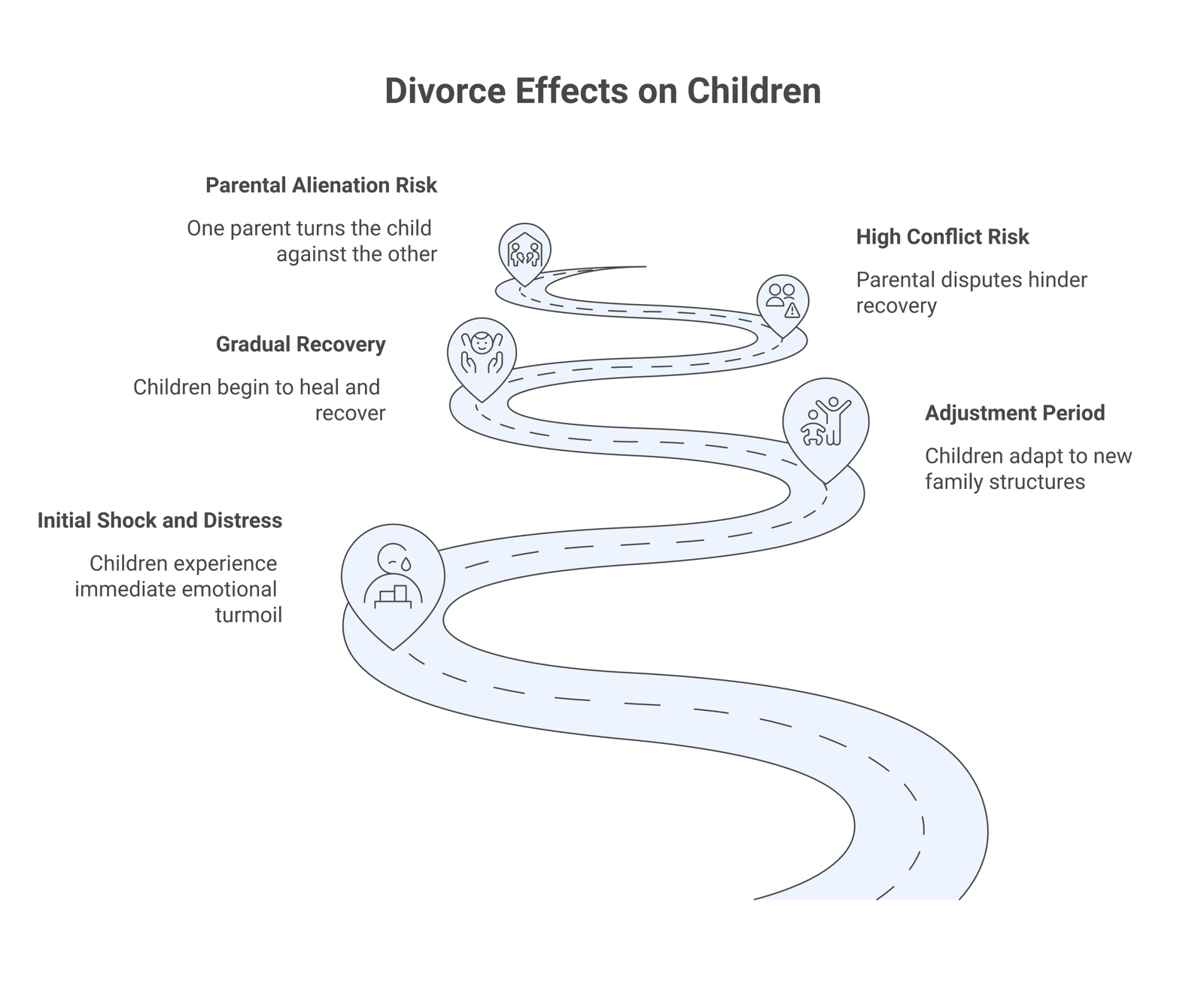
The effects of divorce on children most often include sadness, worry, and changes in behavior. The distress is usually short-term. Most children adjust within about two years. Outcomes depend on how parents handle conflict. Low conflict and time with both parents protect children. High conflict, including parental alienation, raises the risk of lasting harm.
A note on safety
A child pulling away from a parent is not always alienation. Sometimes a child distances from a parent who has been abusive, neglectful, or frightening. That response is protective and reasonable. It is not parental alienation. It calls for a different kind of help. If a child’s safety is at risk, contact local emergency services or a domestic-violence resource first.
General information, not clinical advice. This article offers educational background only. It does not diagnose any child or family. It does not replace care from a licensed professional. Families worried about a child should talk with a qualified clinician.
What are the effects of divorce on children?
The effects of divorce on children often show up as changes in mood and behavior. Many children feel sad, worried, angry, or confused. This is common in the months around a split. Some struggle at school. Others have trouble sleeping. Younger children may get clingy. Older children may pull back or act out.
These reactions are normal. They do not mean a child is broken. The American Psychological Association and the American Academy of Child and Adolescent Psychiatry both note that distress after a divorce is common. What matters more is how long it lasts. The other key question is what shapes the result.
The honest picture has two sides. Divorce is hard on children, and it can carry real risks. Yet most children are resilient. Most adjust within a couple of years. This is most likely when the adults keep conflict low. Both things are true at once.
Short-term emotional and behavioral effects
In the first year or two, children often show clear distress. Common short-term effects include the ones below.
- Sadness and grief as the family changes shape.
- Worry about the future, money, or where they will live.
- Anger, crankiness, or defiance at home or school.
- Trouble focusing, and a dip in grades.
- Poor sleep, stomachaches, or other body complaints.
- A fear that they caused the split.
These reactions reflect a child working through a big change. They are usually strongest right around the separation. They ease as a new routine sets in.
How effects vary by age
Children of different ages react in different ways. Preschoolers may not grasp what is going on. Some slip back to younger habits, like bedwetting or extra clinging. School-age children often feel sad. Many hope their parents get back together. Teenagers may feel angry or embarrassed. Some get pulled into adult conflict. A few take on too much at home.
It helps to know the usual pattern for a child’s age. A young child’s setback, or a teen’s flash of anger, is often part of adjustment. It is not a verdict on the child’s future.
Long-term and developmental effects
Most children do well over time. Still, divorce can raise some long-term risks. On average, children of divorce face a slightly higher chance of school, behavior, and emotional problems. The added risk is modest for most families. It depends far more on what happens after the divorce than on the divorce itself.
The biggest driver of lasting harm is conflict between parents. Children caught in the middle of hostility do worse. Children whose parents split quietly do better. A calm divorce can be easier on a child than an angry marriage.
For most children, these effects fade with time. A smaller group carries heavier or longer effects. That group sits in two places: where conflict stays high, or where a child loses a real bond with one parent.
Most children adjust over time
One finding stands out, so it gets its own heading. Most children of divorce adjust and do fine. They go on to function in the normal range. The early distress is real. It is also usually temporary.
Summaries from the American Psychological Association describe resilience as the normal path. Within about two years, most children settle into the new setup. They resume healthy growth. They do not carry permanent damage. And they are not bound for poor outcomes.
This matters for two reasons. First, it gives worried parents real hope. Second, it shows who is most at risk. Because most children recover, the ones who do not recover stand out. Their struggle can signal something beyond normal adjustment. That something is often high conflict, or the loss of a parent from the child’s life.
What protects children during and after divorce
Decades of study point to a short, practical list. Parents control most of what is on it.
- Low conflict. Shielding children from arguments protects them most. Using a child as a messenger does real harm.
- A warm bond with both parents. Children do best when they keep close ties to both their mother and their father.
- Steady, consistent parenting. Clear routines and warmth from one engaged parent buffer stress.
- Stability. Steady schools, friends, and daily rhythms reduce the losses a child must absorb at once.
- Honest, simple talk. Children need to hear that the split is not their fault. They need to know both parents still love them.
More hands-on guidance lives in the companion guide on protecting children during divorce. The throughline is simple. When parents keep conflict down and keep both bonds intact, children tend to be fine.
When conflict turns a child against a parent: parental alienation
These protective factors point to one serious risk. Sometimes conflict does more than expose a child to arguments. Sometimes one parent works to turn the child against the other. This can be deliberate or not. When it happens, a child may reject a once-loved parent for no good reason. This pattern is called parental alienation. It is one of the more damaging effects a divorce can produce.
Parental alienation is not the normal pain of divorce. Normal distress fades, and it does not target one parent. Alienation builds a lasting, one-sided rejection. The sections below show how it works and why it matters. The wider picture sits in the article on parental alienation after divorce.
How alienation is built
Richard Warshak is a clinical psychologist and the author of Divorce Poison. He describes alienation as rewriting a child’s reality. One parent reshapes the child’s memories of the other. The tools are exaggeration, untruths, and withholding. A warm history gets retold as a cold or scary one. Over time, a child can come to fear a parent they once loved. Warshak compares the method to propaganda that rewrites the past, not just the present.
Alienation does not need a loud, high-conflict divorce. Educator Ryan Thomas describes a stealth version that unfolds in calm, friendly splits. Small comments build a frame, such as a worried tone about money, a sad note that the other parent has other priorities, or a show of teamwork that quietly chips at the bond. Because nothing looks hostile, the targeted parent’s guard stays down. The pattern can run for years before anyone notices.
Why alienation is a serious risk
Researchers now see sustained alienating behavior as a form of abuse, not a simple custody fight. Jennifer Harman, Edward Kruk, and Denise Hines studied this. Their paper in the journal Psychological Bulletin argues that parental alienating behaviors match known patterns of coercive control and family violence. Those behaviors use the same control tactics found in other abusive relationships. The harm to a child is not a side effect.
The effects can reach into adulthood. Adults who were alienated as children report lasting struggles. These include anxiety, depression, low self-esteem, and trouble trusting people. Many also feel guilt over how they treated the rejected parent, once they understood what had happened. The article on long-term effects of parental alienation covers these outcomes. The deeper wound is covered in the guide on parental alienation trauma.
This picture is balanced, not alarming. Alienation is one risk among the effects of divorce. It is far from the most common one. Most divorces never produce it. When it does take hold, it can do serious, lasting harm. That is why it deserves early attention.
Putting the picture together
The effects of divorce on children are real and mostly short-lived. The adults involved shape them the most. Most children feel real distress, then adjust within a couple of years. The ones who struggle longest are usually caught in ongoing conflict, or cut off from a parent they love. Parental alienation is the sharp end of that second risk. Parents who keep conflict low, and keep both bonds strong, give their children the best odds. That path is within reach for most families. For more across the topic, the Learn center gathers the full set of guides.
Frequently asked questions
What are the most common effects of divorce on children?
The most common effects of divorce on children are short-term changes in mood and behavior. Many children feel sad, worried, or angry. Some struggle at school or with sleep for a while. These reactions are normal. Most children adjust within about two years, especially when parents keep conflict low.
Do all children suffer long-term harm from divorce?
No. Most children of divorce adjust and function in the normal range within a couple of years. A smaller group carries longer effects. This usually happens where conflict between parents stays high, or where a child loses a real bond with one parent. The divorce itself matters less than what comes after.
What protects children from the negative effects of divorce?
Low conflict between parents protects children most. A warm bond with both parents helps too. So do steady routines, consistent parenting, and honest reassurance that the split is not the child’s fault. Keeping children out of the middle of disputes is the single most powerful step parents can take.
How is parental alienation different from a normal reaction to divorce?
A normal reaction to divorce is general distress that fades. It does not single out one parent. Parental alienation is a lasting, one-sided rejection of a once-loved parent. One parent’s behavior builds it over time. Unlike normal adjustment, it does not resolve on its own, and it can cause lasting harm.
Can children recover from the effects of divorce?
Yes. Most children recover from the short-term effects of divorce within about two years. They go on to develop normally. Recovery is strongest when parents lower conflict and support the child’s bond with both parents. Children facing high conflict or alienation may need extra support from a qualified clinician.
Sources and further reading
- American Psychological Association. Divorce and child custody. apa.org/topics/divorce-child-custody
- American Academy of Child and Adolescent Psychiatry. aacap.org
- Harman, J. J., Kruk, E., & Hines, D. A. (2018). Parental alienating behaviors: An unacknowledged form of family violence. Psychological Bulletin, 144(12), 1275 to 1299. https://doi.org/10.1037/bul0000175
If you or your child are in crisis
Free and confidential help is available right now.
- 988 Suicide and Crisis Lifeline. Call or text 988.
- Childhelp National Child Abuse Hotline. 1-800-422-4453.
- NAMI HelpLine. 1-800-950-6264.
Last reviewed: 2026-06-06. Author: Alex Buckles (PAC Founder).