

A gatekeeping parent is a mom or dad who controls how much a child sees the other parent. Some gatekeeping guards a child from real harm, and that is fine. Other gatekeeping blocks a healthy bond for no good reason, and that kind can shade into parental alienation.
A note on safety
Limiting contact for a real safety reason is protective gatekeeping. If the other parent has been abusive, neglectful, or truly unsafe, holding back access is the right call, and it is not parental alienation. The two must never be treated as the same thing. If a child is in danger, call local police or a domestic-violence line first. The American Psychological Association shares general help on divorce and child custody.
This page is general information, not clinical or legal advice. It explains a term and the research behind it. It does not judge any one family. It does not set up a care or legal bond, and it does not tell a reader what to file in court. Anyone facing a custody or safety choice should talk with a licensed clinician or lawyer in their own area.
What is a gatekeeping parent?
A gatekeeping parent is a parent who limits or controls how a child connects with the other parent. The word “gatekeeping” comes from family research. It names the daily ways one parent shapes how much the other gets to take part. Almost every co-parent does some of this. A dad who sets bedtime, or a mom who fills out school forms, works a gate of sorts.
Gatekeeping turns into a worry only at the far end. When a parent shuts the gate for no good reason, the child can lose a bond that helps them grow. Experts map the act on a range, not as a simple on-or-off switch. That range is the key to telling helpful gatekeeping from harmful gatekeeping.
The gatekeeping spectrum, from practical to restrictive
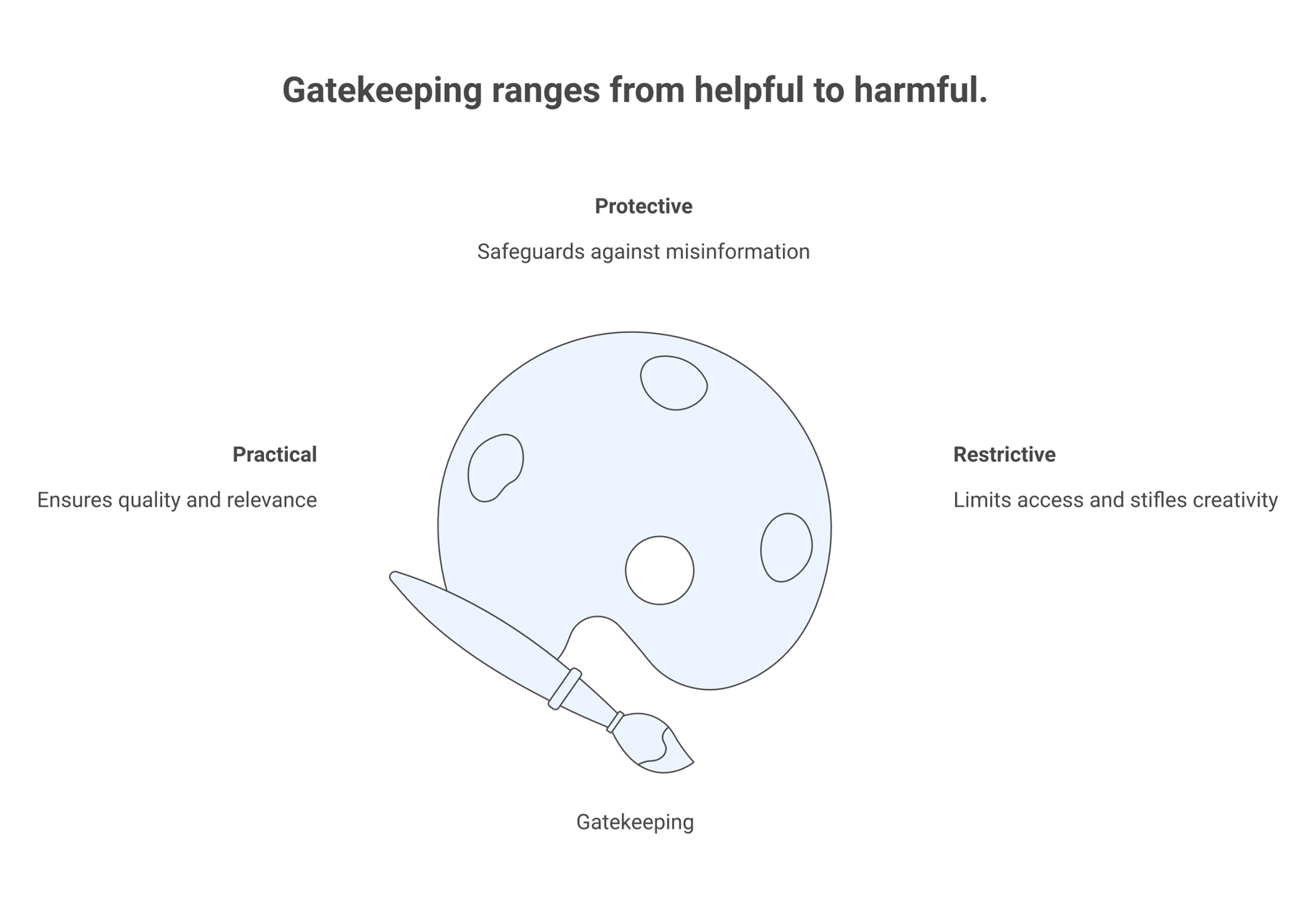
Family-law and child-development teachers map gatekeeping as a spectrum with three broad zones. The zones help a reader place a real act in a fair spot, instead of jumping to the worst label.
Practical gatekeeping is the routine, low-stakes kind. A parent who says “finish dinner, then call your dad back” is doing plain parenting. The contact still happens. Only the timing moves.
Protective gatekeeping sees a real worry and acts on it. A parent who says “this concerns me, can you tell me more” is checking on the child’s safety first. The motive is the child’s good.
Restrictive gatekeeping is the harmful end. Court-ordered contact that never happens, blocked handoffs, and ignored calls all sit here. The bond is being shut down, and no real safety reason backs it up.
One family-law teacher calls gatekeeping “the canary in the coal mine.” The point is simple: the gatekeeping pattern often shows how much conflict a child is soaking up. That links to Emotional Security Theory, the research idea that a child’s health rests less on whether the parents live apart than on the conflict the child sees between them. Low conflict tends to build strength. High conflict and fear tend to do harm.
Protective gatekeeping, when limiting contact is justified
Protective gatekeeping is when a parent limits contact for a real safety reason. A parent who has been violent, who fails to care for the child, or who uses drugs or alcohol in a risky way near the child gives the other parent real cause to limit time. Holding back contact here is not alienation. Courts treat it as a fair reply to risk.
Amy Baker built a well-known model for spotting alienation. One of her four needed factors is the lack of real abuse or neglect by the rejected parent. Where true abuse exists, the child’s pull-away is protective, not alienation. The two must never be mixed up, because mixing them can send a child back into harm.
A child who pulls away from a parent who hurt them shows a healthy survival reply. Baker’s work adds a fact that surprises many people. Even kids who have been abused most often still want to mend the bond, not cut it off. That is one reason safety claims always deserve a careful, fact-based look, not a fast label. The gap between a scared child and an alienated child is covered on the parental alienation syndrome page.
Restrictive gatekeeping, control without good cause
Restrictive gatekeeping blocks a child’s bond with a co-parent who is not a real danger. Here the driver is control, not safety. The parent shuts the gate because they want to, not because the child needs guarding.
Researchers tie this pattern to coercive control. Jennifer Harman and her colleagues argue that many alienating acts match the same power-and-control moves seen in family violence. Blocking phone calls, ignoring the parenting plan, and using a child to carry mean messages all show up on that map. Their 2018 review in the journal Psychological Bulletin makes the case that these acts add up to a known form of family violence, not plain conflict. Readers can view the Harman, Kruk and Hines paper in full.
Stan Korosi frames the same conduct as relational power abuse that is not tied to gender. In his view, restrictive gatekeeping is one way a stronger parent in the family wears down the standing of the other. The frame keeps the focus on the act and the power gap, not on which parent is the mom and which is the dad. Moms and dads alike can be the restrictive gatekeeper, and either can be the one shut out. When this control becomes a steady pattern, it can rise to real harm for the child, a topic covered in parental alienation as emotional abuse.
How restrictive gatekeeping relates to parental alienation
Restrictive gatekeeping and parental alienation overlap, yet they are not the same thing. Gatekeeping names one act: controlling access. Alienation names a wider campaign that turns a child against a once-loved parent.
Baker’s four-factor model makes the tie clear. Limiting contact is just one of seventeen alienation moves she lists, not the whole of it. The other moves include badmouthing the other parent, telling a child that parent does not love them, forcing the child to pick a side, and wiping that parent from photos and talk. A true campaign of alienation usually braids several of these together over time.
So a parent can gatekeep in a restrictive way and still not meet the full mark of alienation. Blocking contact is a serious red flag, and it can be one brick in an alienation pattern. On its own, though, restrictive gatekeeping is smaller than the full picture. Treating gatekeeping as a possible early signal, rather than as proof of alienation, keeps the read honest. Alienation tends to deepen in clear phases, which the stages of parental alienation page lays out. Many of the warning acts also show up in signs your ex is alienating your child.
Why the distinction matters for children
Getting this line right guards children twice. Treating every limit on contact as alienation can run over a real safety worry and push a child toward a parent who hurt them. Treating control as harmless can leave a child stuck behind a shut gate for no good reason. Both slips land on the child.
Emotional Security Theory points to what really drives harm. A child does better when the conflict around them stays low, whatever the custody plan looks like on paper. That research shifts the goal. The aim is not to win a fight over the gate. It is to lower the conflict the child has to live inside. Parents, clinicians, and judges who hold that aim tend to make calmer, more child-first choices. For the wider picture of how these patterns fit, the Learn library gathers the linked topics in one place.
Frequently asked questions
What is a gatekeeping parent?
A gatekeeping parent is a parent who controls how much a child sees the other parent. The act runs along a spectrum. At one end it is plain and harmless, such as shifting the time of a phone call. In the middle it can be protective, acting on a real safety worry. At the far end it turns restrictive, blocking a healthy bond for no good reason.
Is gatekeeping the same as parental alienation?
No. Gatekeeping names one act, controlling access. Parental alienation names a wider campaign to turn a child against a parent. Restrictive gatekeeping can be part of an alienation pattern, and limiting contact is one of the moves researchers list. A parent can gatekeep in a restrictive way and still not meet the full mark of alienation.
Can gatekeeping ever be a good thing?
Yes. Protective gatekeeping limits a child’s contact for a real safety reason, such as past violence, neglect, or risky drug or alcohol use by the other parent. Holding back contact there is the right call, and it is not alienation. Safety claims still deserve a careful, fact-based look, because not every worry turns out to be a real danger.
What is the difference between protective and restrictive gatekeeping?
Protective gatekeeping meets a real risk to the child, so the motive is safety. Restrictive gatekeeping blocks a bond with a parent who is not a real danger, so the motive is control. The same act, such as calling off a visit, can be protective in one case and restrictive in the next. The reason behind it is what splits the two.
Is restrictive gatekeeping a form of emotional abuse?
It can be. When restrictive gatekeeping turns into a steady pattern of control, researchers tie it to coercive control and to the kind of harm that can hurt a child. One called-off visit is not abuse. A long campaign of blocking a safe and loving parent is a different matter, and it earns a careful, expert look.
Sources and further reading
- American Psychological Association. Divorce and child custody. apa.org/topics/divorce-child-custody
- Harman, J. J., Kruk, E., & Hines, D. A. (2018). Parental alienating behaviors: An unacknowledged form of family violence. Psychological Bulletin, 144(12), 1275 to 1299. https://doi.org/10.1037/bul0000175
If you or your child are in crisis
Free and private help is here right now.
- 988 Suicide and Crisis Lifeline. Call or text 988.
- Childhelp National Child Abuse Hotline. 1-800-422-4453.
- NAMI HelpLine. 1-800-950-6264.
Last reviewed: 2026-06-06. Author: Alex Buckles (PAC Founder).