

This page is general information, not legal or clinical advice. It does not create a professional relationship and does not address any one state’s rules.
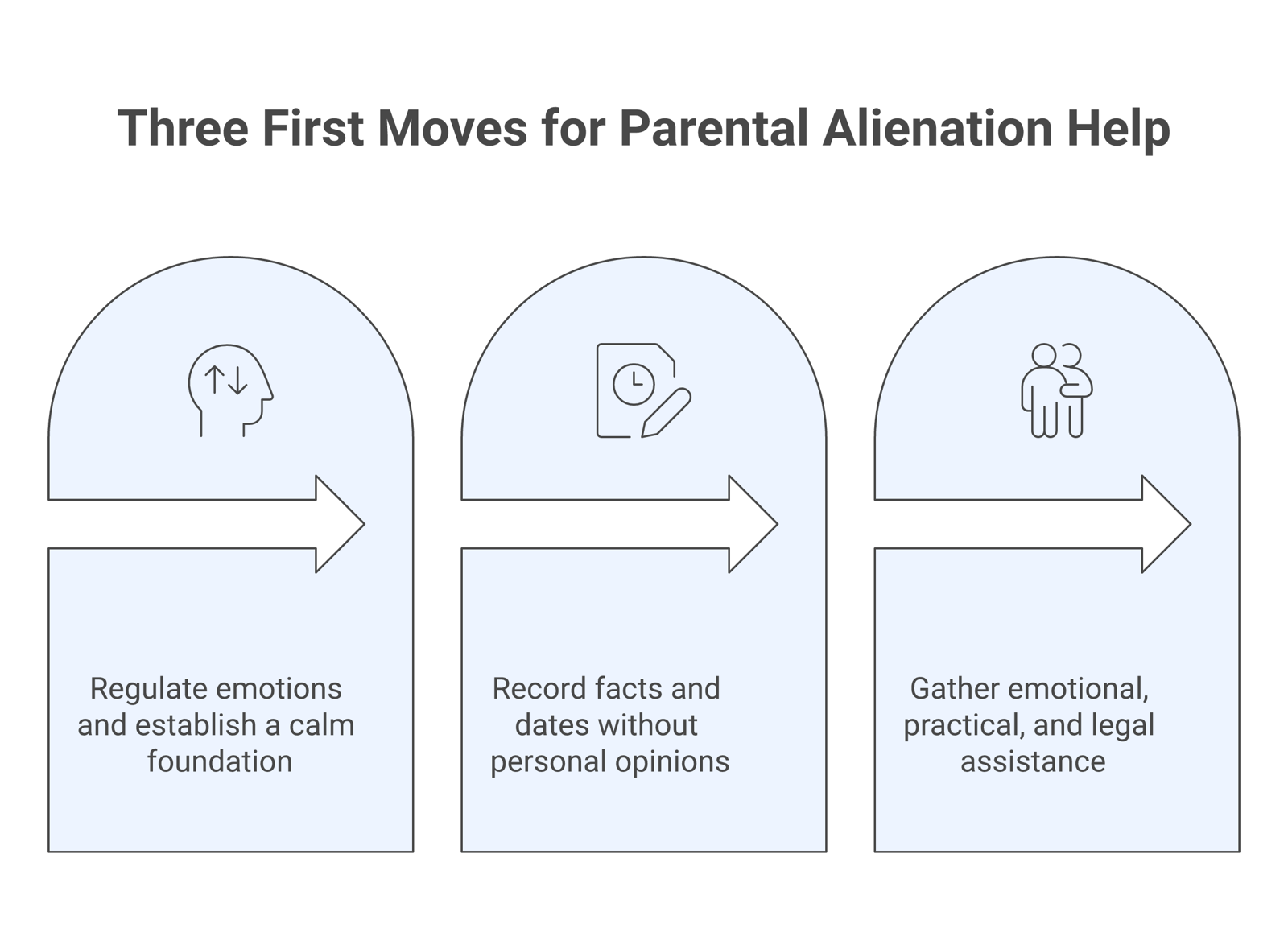
Getting parental alienation help starts with three calm moves, in order. Steady yourself first, because a regulated parent thinks and acts better. Document what is happening in plain, factual notes. Then line up the right support: emotional, practical, and where needed, legal. This page walks through each move and where to go next.
Before anything else
Estrangement caused by genuine abuse is not parental alienation. If a child is pulling away because someone has harmed them, the priority is the child’s safety, not a label. If you are worried about abuse, contact Childhelp or local authorities. The rest of this page speaks to the painful but different situation of alienation.
Parental alienation help starts with steadying yourself
Parental alienation help begins with self-regulation, because a steady parent is the one a child can eventually come back to. It sounds backward when your child is slipping away and every instinct says to act fast. The research on stress and trauma points the other way. A parent running on fear, anger, and panic makes worse decisions, sends worse messages, and reads worse to the courts and professionals who may judge the case later.
Steadying yourself is concrete, not vague. The psychologist Faust Ruggiero, who has worked with targeted parents, teaches a body-first approach: track your sleep, eating, and physical tension, because the body and the mind move together. He also points to the script you run before a hard moment. If your baseline self-talk is catastrophic, the crisis will borrow that voice. Slowing the breath, naming the fear, and gathering facts before reacting all give you back the ability to think.
This is the work a therapist supports best, and you do not have to do it alone. The strain of an alienation case is heavy, and a licensed clinician can help you carry it. See therapy for alienated parents for what that support looks like. Becoming the calm, present parent is not a soft step. It is the foundation everything else rests on.
Document what is happening, calmly and factually
The second move is to keep a clean record. Write down what happens, when it happens, in plain language. Missed calls, canceled visits, a comment your child repeats that does not sound like them. Note the date and the fact, and stop there.
The discipline that matters here is restraint. A record full of anger and interpretation works against you. A record of dates and facts works for you, because it informs rather than inflames. Keep it boring on purpose. If a professional ever needs to understand the pattern, a calm timeline is far more useful than a furious essay. The page on how to document parental alienation walks through building that record well.
Documenting also helps you. When the days blur together and you start to doubt your own memory, the record steadies you. It turns a swirl of painful moments into something you can see clearly, which makes the next decisions easier.
The three kinds of help
Help comes in three forms, and most parents need some of each. Knowing which is which keeps you from asking the wrong person for the wrong thing.
Emotional help
Emotional help is therapy and peer support. A therapist addresses the trauma, anxiety, and grief the situation creates. A support group surrounds you with people who already understand, which eases the isolation that makes alienation so heavy. Both matter. Start with therapy for alienated parents and parental alienation support groups.
Practical help
Practical help is the steady guidance that keeps you organized and oriented. Some parents work with an advocate or coach, a non-licensed support person who helps them understand the dynamic and prepare for meetings. That role is real and useful, with limits worth knowing before you hire one. See what a parental alienation advocate does.
Legal help
Legal help is an attorney, when the situation calls for it. A lawyer is the only person who can advise you on the law and represent you in court. If a parenting order is being broken, or the case is heading to a hearing, this is the help to line up. See parental alienation lawyer for what that role involves and how to think about it.
Make sure it is alienation, not something else
It is worth pausing to check the ground you are standing on. Children pull away from parents for many reasons. Sometimes it is alienation, where one parent’s influence turns a child against the other without good cause. Sometimes it is estrangement, where a child distances themselves in response to real harm or a real rupture. The two look similar from the outside and call for very different responses.
Getting this right protects everyone, especially the child. Honest help holds the distinction carefully and does not assume every rejection is alienation. The page on parental alienation versus estrangement walks through how the two differ, so you can think clearly about your own situation rather than reaching for the most painful label.
A realistic word about outcomes
Hope belongs here, and so does honesty. Many relationships damaged by alienation can heal, and parents do reconnect with children who once turned away. At the same time, no one can promise a timeline or an outcome, and anyone who does is not being straight with you.
Learning everything about alienation is a start, not a finish. Knowing what is happening is not the same as having a path through it. The forward work is staying steady, keeping the door open, and using the right help over time. For the day-to-day of that, see dealing with parental alienation.
Where to go next on this site
If you are still getting oriented, the Learn section explains what alienation is and how it works, including the stages of parental alienation. If you are ready to act, the Help section covers coping, communication, and support. If the case is legal, the Court section covers documentation, evaluations, and working with an attorney. You do not have to read all of it today. Steady yourself, keep a calm record, and reach for one kind of help. That is enough to start.
Frequently asked questions
What should I do first about parental alienation?
Steady yourself first. A regulated parent makes better decisions and sends better messages than a panicked one. Then keep a calm, factual record of what is happening, and line up support: a therapist or support group, practical guidance, and an attorney if a court order is involved. Act in that order rather than all at once.
Where can I get help for parental alienation?
Help comes from three places: emotional support (a licensed therapist and a peer support group), practical support (an advocate or coach who helps you stay organized), and legal support (a family-law attorney). Most parents need some of each. Start with the kind that feels most missing right now.
What kind of support helps with parental alienation?
Therapy helps with the trauma and the strain. Support groups ease the isolation. An advocate helps you understand the dynamic and prepare. An attorney handles the legal side. The right mix depends on your situation, but steadying yourself and keeping a calm record help in every case.
Can parental alienation be fixed?
Many damaged relationships do heal, and parents reconnect with children who once turned away. No one can promise a timeline or guarantee a result, though. The honest path is to stay steady, keep the door open, and use the right help over time rather than chasing a quick reversal.
Is it alienation or estrangement?
They can look the same but differ at the root. Alienation is a child turned against a parent without good cause. Estrangement is a child distancing in response to real harm. The two call for different responses, so it is worth understanding the difference before deciding what to do.
What this page does not do
This page does not promise to reverse alienation, and it does not give legal advice. It does not coach tactics against the other parent, and it does not diagnose your situation. It does not treat a child’s rejection as alienation without room for other explanations. It is general information, not legal or clinical advice, and it does not address any one state’s rules.
Sources and further reading
- American Psychological Association. Divorce and child custody. apa.org/topics/divorce-child-custody
- Association of Family and Conciliation Courts. afccnet.org
- Childhelp National Child Abuse Hotline. childhelp.org
If you or your child are in crisis
Free and confidential help is available right now.
- 988 Suicide and Crisis Lifeline. Call or text 988. 988lifeline.org
- Childhelp National Child Abuse Hotline. 1-800-422-4453. childhelp.org
- NAMI HelpLine. 1-800-950-6264. nami.org/help
Last reviewed: 2026-06-09. Author: Alex Buckles (PAC Founder). Editorial review: held to the PAC Editorial Standards (balance, primary-source citation, reader safety); an independent expert review board will be appointed.