

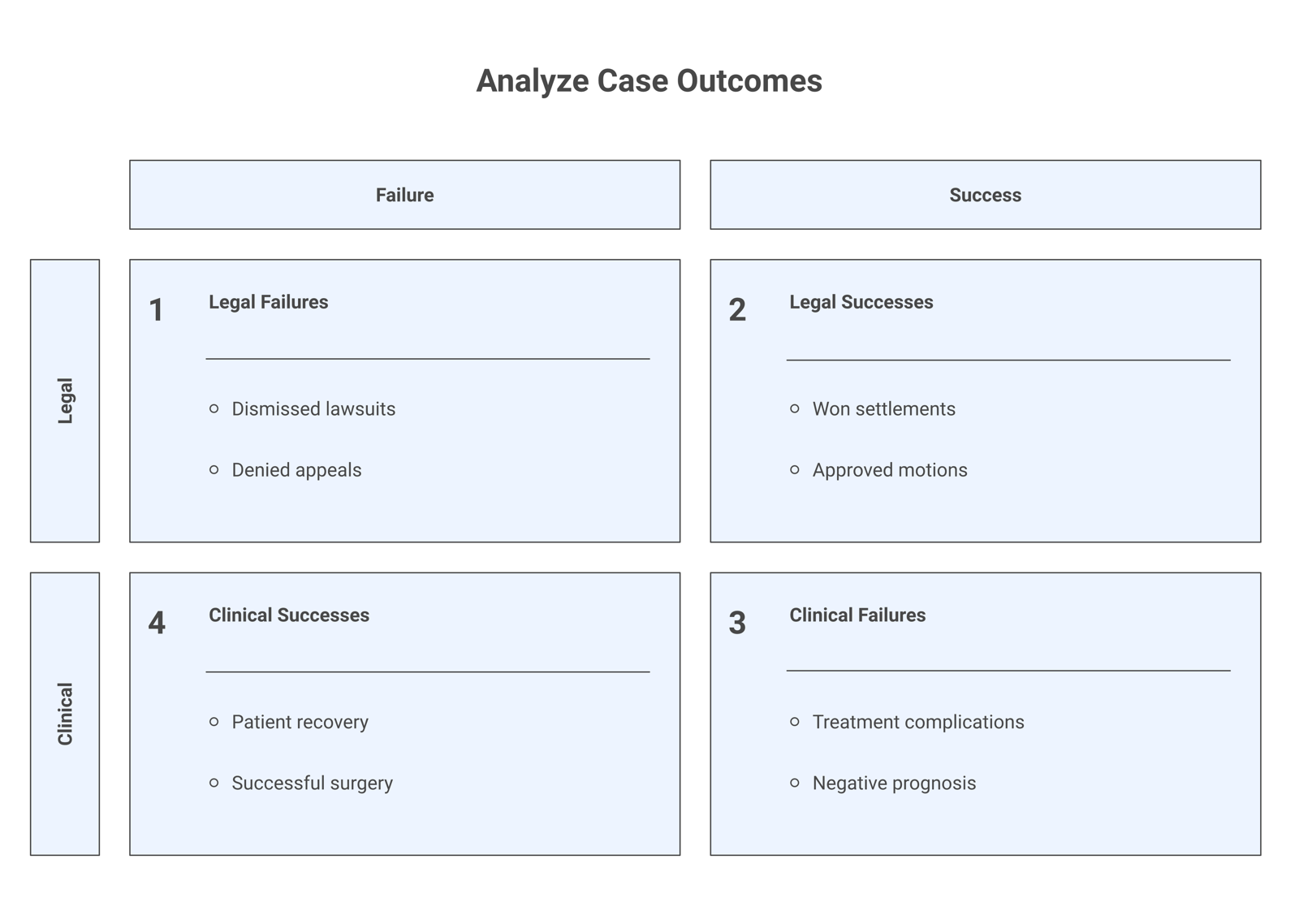
Parental alienation success and failure stories are honest, evidence-weighted case studies of what happens to families when the system and treatment work, and when they fail. This hub routes you to four collections: legal wins, legal failures, clinical wins, and clinical failures. Every case is labeled by how strong its evidence is.
A note on the abuse boundary, first
A child who pulls away from a parent who hurt them is showing justified estrangement, not alienation. The two are never treated as the same thing here. A court finding can be wrong in either direction. If a child may be unsafe, contact local law enforcement or a child-protection agency before anything else.
These pages are general education. They are not legal or clinical advice, and they do not assess any one family. Each story shows a pattern, not a verdict on your situation. For your own case, talk with a licensed attorney or clinician in your area.
What this silo is
Parental alienation success and failure stories are documented, clearly labeled accounts of what happened to real families when the legal and clinical systems either worked or failed. Some stories are wins. A court spots genuine alienation, screens out abuse, and the child does better. A treatment plan holds, and a broken bond heals. Other stories are failures. A protective parent loses a child to an alienation label. A reunification program does harm. An order to fix alienation gets ignored.
This silo gathers all four kinds in one place. The goal is simple. A parent, a clinician, or a reporter should be able to see what real outcomes look like, with the good and the bad side by side.
How we weigh the evidence
Not every story carries the same weight, so we label each one. A reader should always know whether a story is a court record, a peer-reviewed study, a single clinician’s account, or a teaching example built to make a point.
The evidence ladder runs from strongest to weakest like this:
- Documented case law and news-verified accounts sit at the top. A published court opinion or a careful investigative report can be checked.
- Peer-reviewed case series come next. These are written up by clinicians and reviewed by other experts.
- Anonymized vignettes rank lower. They come from real practice, but the details are hidden and the case cannot be traced.
- Illustrative or composite stories sit at the bottom. These are teaching examples, sometimes invented to show a model. They are useful, but they are never presented as proof of an outcome.
When a story is a composite, we say so plainly. A made-up happy ending is not evidence, and dressing one up as a real result would break trust.
The balance rule
Every page in this silo follows one rule. It must show both directions of error.
A success page cannot only celebrate. It also has to name the risk that alienation claims get misused. Joan Meier at George Washington University led a study of contested custody cases. It found that abuse claims by mothers were far more likely to fail when fathers raised alienation. You can read the NIJ summary of that study. That risk is real, and a success page has to hold it in view.
A failure page cannot only warn. It also has to affirm that genuine alienation exists and harms children. Jennifer Harman and colleagues argue that alienating behaviors map onto known patterns of family violence and coercive control. That harm is real too. A page that denied it would be just as one-sided as a page that ignored the misuse risk.
So both truths sit on every page. Alienation is real and can hurt a child. Abuse is real and must never be relabeled as alienation. The hard work, for a court or a clinician, is telling the two apart in a specific family. The stories in this silo show what happens when they get it right, and when they get it wrong.
Why failure cases are often better documented
Here is an honest point that shapes this whole silo. Failure cases tend to leave a paper trail. Clean successes often do not.
Think about why. A case that goes wrong often gets appealed, so it produces a written court opinion. A serious harm can draw investigative reporting, like the ProPublica coverage of how alienation arguments play out in family court. A botched program can trigger a complaint or a lawsuit. All of that creates a record anyone can check.
A quiet success rarely does any of this. A child reconnects with a parent, the family steps back from court, and life moves on. Nobody writes it up. The story is real, but it leaves almost no trace.
This creates a lopsided record. There is more hard documentation of failure than of success. We could hide that by filling the success pages with polished but unverifiable stories. We do not. Instead, the success pages lean on the few well-documented wins. They label the weaker examples honestly. And they admit where the record is thin. The point of this silo is to show all of it, without cherry-picking the parts that fit a preferred story.
The four collections
Each collection is its own pillar page. Start with the one that fits your need.
Legal success stories
Legal success stories cover cases where a court screened out abuse, found that one parent had undermined the child’s bond, ordered a proportionate remedy, and the child did better over time. These wins are real, but they are harder to document than failures, and an alienation finding is never automatic.
Legal failure stories
Legal failure stories show courts failing in two opposite ways. In one, an alienation label overrides substantiated abuse and moves a child toward the person they fear. In the other, a court ignores genuine alienation and leaves its own order unenforced. Both are misclassification, and both harm children.
Clinical success stories
Clinical success stories describe what happens when treatment works. Offending-parent therapy, reunification therapy, and court backing, applied after abuse is screened out, can rebuild a damaged relationship. Outcomes vary, much of the published evidence is illustrative, and coercive programs can themselves cause harm.
Clinical failure stories
Clinical failure stories show treatment failing in describable ways. Ordinary therapy without court backing can entrench the problem. Coercive reunification can hurt a child. A hybrid or abuse case mislabeled as alienation gets the wrong treatment. The failure is usually a mismatch, not proof that help is impossible.
Where to go next
If you want the evidence side of a court case, see how to prove parental alienation. If you want to understand the treatment these stories describe, see what is reunification therapy. And if you are still weighing whether alienation is a real phenomenon at all, start with is parental alienation real.
Frequently asked questions
What are parental alienation success and failure stories?
They are honest case studies of what happens to families when the legal and clinical systems work and when they fail. This silo sorts them into four collections: legal success, legal failure, clinical success, and clinical failure. Each story is labeled by how strong its evidence is.
Are these real cases or made up?
Both kinds appear, and each is labeled. Documented court cases and news-verified accounts rank highest. Illustrative or composite stories are clearly marked as teaching examples. A composite is never presented as a real outcome.
Why are failure stories better documented than success stories?
Failures tend to leave a record. They get appealed, reported on, or turned into complaints. Quiet successes usually do not, because the family simply moves on. So there is more hard proof of failure than of success, and these pages say so rather than hiding it.
Do these stories take a side on whether alienation is real?
No. The silo presents all of it without cherry-picking. Genuine alienation is treated as real and harmful, abuse is treated as real and never relabeled, and contested ideas are described as contested. The aim is an honest picture, not a verdict.
Which collection should I read first?
Pick by need. For a court outcome, read the legal success or legal failure stories. For a treatment outcome, read the clinical success or clinical failure stories. Each pillar opens with a short, plain summary so you can tell quickly if it fits.
Sources and further reading
- Meier, J. S., et al. (2020). U.S. Child Custody Outcomes in Cases Involving Parental Alienation and Abuse Allegations. National Institute of Justice. nij.ojp.gov
- Harman, J. J., Kruk, E., and Hines, D. A. (2018). Parental Alienating Behaviors: An Unacknowledged Form of Family Violence. Psychological Bulletin, 144(12). doi.org/10.1037/bul0000175
- ProPublica. Parental Alienation and Its Use in Family Court. propublica.org
If you or your child are in crisis
Free and confidential help is available right now.
- 988 Suicide and Crisis Lifeline. Call or text 988. 988lifeline.org
- Childhelp National Child Abuse Hotline. 1-800-422-4453. childhelp.org
- NAMI HelpLine. 1-800-950-6264. nami.org/help
Last reviewed: 2026-06-07. Author: Alex Buckles (PAC Founder). Editorial review: held to the PAC Editorial Standards (balance, primary-source citation, reader safety); an independent expert review board will be appointed.