

Parental alienation therapy is not a single treatment but four overlapping modalities: individual support for the targeted parent, family-systems work, intensive reunification therapy, and attachment-based clinical assessment. None work reliably while the child remains exposed to the alienating behavior. Choose a clinician trained specifically for this dynamic, not a generalist who treats it as ordinary conflict.
A note before you read
A child’s rejection of a parent is not always alienation. If the rejected parent has been abusive, neglectful, or genuinely dangerous, the child’s distance is justifiable estrangement, not parental alienation. Reunification therapy aimed at a justifiably estranged child can re-traumatize that child. The two situations are clinically distinct and must not be treated the same way.
What parental alienation therapy is
Parental alienation therapy is a small family of treatments that share one job: protecting a child’s relationship with a parent that is being undermined by another adult in the child’s life. The label covers four different kinds of work. One supports the targeted parent individually so that they can stay steady through a long case. A second uses a family-systems lens to map the roles and alliances that keep a rejection in place. A third is a structured, often intensive program designed to repair a broken bond directly. A fourth is a clinical assessment grounded in attachment science that aims to confirm whether a case meets the criteria for child psychological abuse.
These four jobs use different methods and different clinicians. Knowing which one a given therapy is doing keeps expectations realistic. A targeted-parent support group is not a reunification program. A weekly family-counseling appointment is not a clinical assessment. Asking the wrong question of the wrong modality is one of the most common ways well-intentioned therapy stalls.
One idea runs through all four, and it shapes everything else on this page. Therapy in an alienation case cannot do its work while the child is still being actively turned against the parent. That precondition comes first.
The protection-first precondition
Clinical psychologist Craig Childress states the rule plainly. “You can’t fix a child in the middle of a battlefield and call it therapy. You first need to map out the battlefield, disarm the traps, and make sure the kid survives the tour. Only then can healing begin.” Adult survivor and clinician collaborator Maddie, who runs the Anti-Alienation Project, has documented the cost of ignoring it. She went through twenty years of individual therapy, reunification therapy with her father, and family therapy, and reported that the work made the situation worse rather than better.
The mechanism is structural. A child who returns each week to a parent who keeps shaping the child against the other parent arrives at every session carrying a fresh load of the absorbed story. The therapy cannot override in one hour what the home reinstalls over seven days. The Childress and Maddie protection-first doctrine treats this as a fact about how environments and clinical hours interact, not as a question of effort or skill.
Protection usually means separation from the alienating influence for a defined window. That is a child-protection measure, not a punishment. The reasoning rests on a serious finding. Research by Jennifer Harman and colleagues, published in the journal Psychological Bulletin, maps parental alienating behaviors directly onto the established pattern of coercive control and treats them as a recognized form of family violence. If the behavior is a form of abuse, then shielding the child from continued exposure is the first step, exactly as it would be with any other form of harm. Linda Gottlieb names the same sequence as protection first, reunification second. Therapy follows protection. It does not replace it.
The four types of parental alienation therapy
Individual support for the targeted parent
The first modality is for the targeted parent alone, and it is load-bearing in its own right. Clinical psychologist Faust Ruggiero offers a process-over-destination model for parents in the long middle of a case. Stop chasing a fixed resolution, he advises, and instead lower your baseline through daily practice, because a nervous system kept at a constant high alert cannot think clearly or show up steady. The work is daily breathwork, sleep, movement, and grounding, not crisis management.
Psychologist Sue Cornbluth adds a relational engine the parent carries between sessions: listening, acknowledging, validating, and compassion. She reports that she has not reunified a family without all four. Documentary maker and reunification coach Ginger Gentile names the reason this self-work is not optional. Children do not reunite with a parent who reads as weak, lost, or consumed by the fight, so the targeted parent’s own stability becomes a precondition of any later reunion. For day-to-day coping while the case grinds, see dealing with parental alienation.
Family-systems therapy
Family-systems therapy looks at the family as an interconnected unit rather than at one person in isolation. It draws on the work of Bowen, Minuchin, and Haley, and it pays attention to roles, alliances, and boundaries. In an alienation case, a systems lens can name the patterns that hold the rejection in place, such as a child elevated into an adult role, a parent and child enmeshed into a single viewpoint, and a targeted parent pushed to the edge of the system.
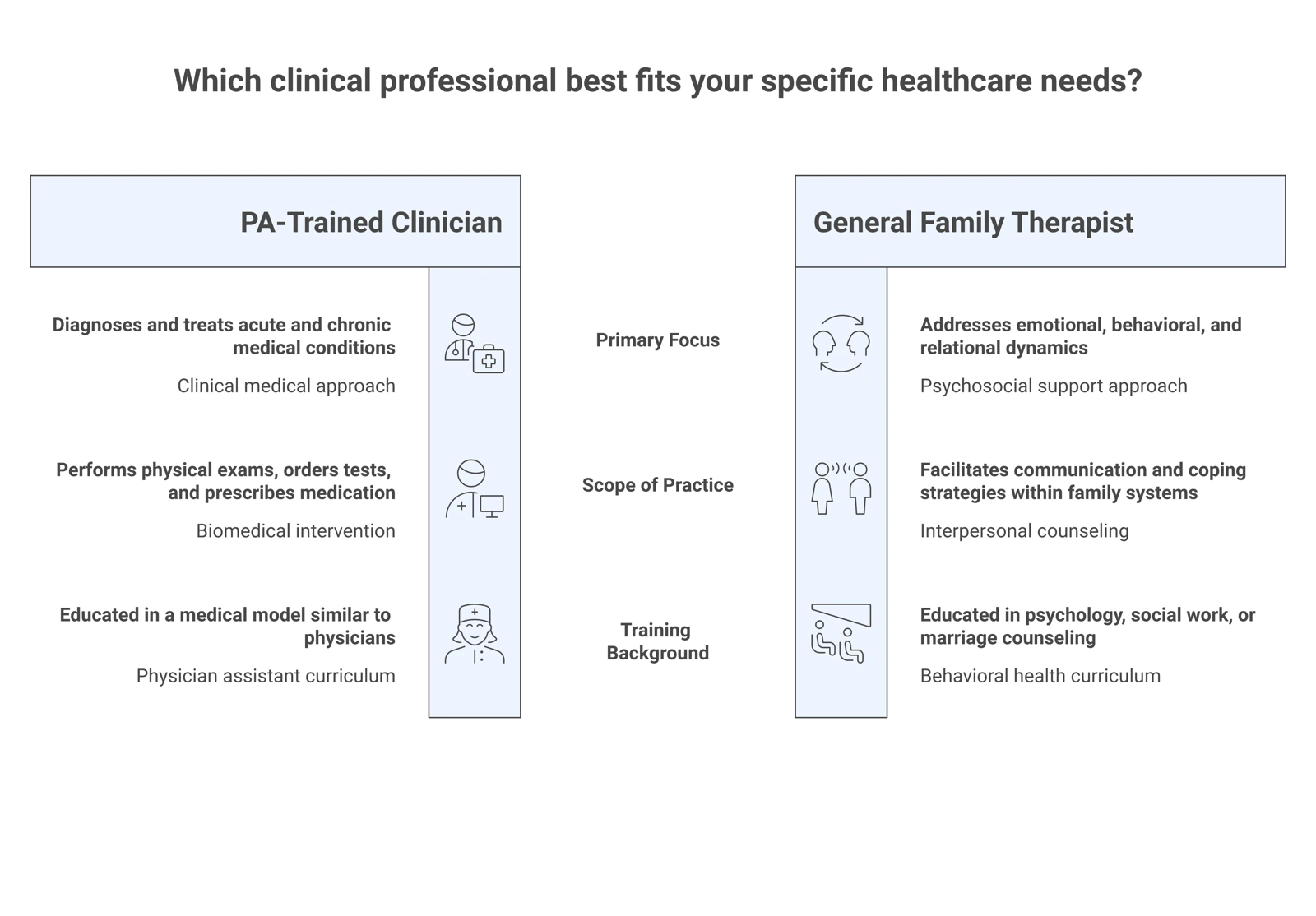
A systems approach can be useful, with one firm condition. It must be led by a clinician who understands alienation specifically. A generic family therapist who treats the case as ordinary high-conflict counseling can adopt the child’s absorbed account as fact and work the wrong problem. The American Psychological Association maintains general guidance on family therapy and on divorce and child custody, which is a reasonable starting point for understanding the modality, though it is not alienation-specific.
Intensive reunification therapy
The third modality is the structured reunification program. The best-known versions are intensive and multi-day rather than weekly. Dr. Lynn Steinberg describes the lineage. The approach traces back to a 1972 FBI program for brainwashed abducted children, which psychologist Randy Rand adapted into a civilian framework, which then seeded Richard Warshak’s Family Bridges and several successor programs, including Linda Gottlieb’s Turning Points for Families and Steinberg’s One Family at a Time.
Steinberg’s four-day model gives a clear picture of the structure. Day one onboards the child and reunites parent and child in the office, and every accusation is written down in full. Day two walks through each accusation one by one. Day three covers cult dynamics and Stockholm syndrome and screens an educational film, often the first time the child hears the words “parental alienation.” Day four brings in extended family for a reunion and a graduation ceremony. A ninety-day no-contact window with the alienating parent follows, during which that parent is meant to begin their own therapy.
Family Bridges has produced the most-cited outcome data in the field, with peer-reviewed work indexed on PubMed reporting high relational change. The caveats matter and the honest reader should hold them. The published figures, beginning with Warshak’s 2010 initial case series, are the program developer’s own report: small samples, parent and child self-report, no control group, and no independent evaluation of the program exists. Read these outcomes as developer-reported results in a literature with real structural limits, not as controlled-trial proof. For where reunification therapy sits inside the wider intervention sequence, see how to stop parental alienation.
Attachment-based clinical assessment
The fourth modality is not “therapy” in the weekly-appointment sense at all, and it is the one most readers have never heard of. It is a clinical assessment grounded in attachment science. Craig Childress’s three-indicator model asks the clinician to confirm three things at once: a child’s attachment system is being suppressed toward a parent who is broadly within the normal range, the allied parent shows specific personality features such as splitting and an absence of empathy or the child shows phobic anxiety toward the targeted parent, and the child holds a fixed and false belief that the targeted parent is fundamentally inadequate. When all three are present, the picture meets the DSM-5 standard for child psychological abuse confirmed.
The point of the assessment modality is the sequence. Assessment comes before treatment so that the right treatment can be chosen, and so that the protection question can be raised on solid ground. Childress’s clinical posture, also adopted by Linda Gottlieb’s clinical work, is that treating the case as a custody conflict skips the diagnostic step that decides what is actually wrong. Without an assessment, therapy is guessing.
Why general family therapy often makes alienation worse
Therapy by a kind, well-credentialed generalist is one of the most reliable ways to make a moderate or severe alienation case worse, and the reason is structural rather than personal.
The first reason is the therapeutic alliance itself. Canadian attorney and clinical commentator Brian Ludmer names this the therapeutic-alliance contraindication. In ordinary individual therapy, the alliance, the implicit deal of “open up to me, I won’t judge you, I will walk this with you,” is foundational. In systemic family therapy for alienation, the alliance is fatal. The clinician’s client in this work is the court and the whole family system, not the child alone. There is no confidentiality. The clinician has to hold the child accountable in the room, with the parent present, and work through every grievance one at a time. A therapist drawn to the helping professions because they want to be liked by the child will not do that. They will side with the child’s stated wishes, because siding feels caring, and they will lock the rejection in.
The second reason is grievance framing. Ludmer’s rule for any reunification session is that the child can raise any grievance, but only when it is framed in a solution-focused way. “Mom is mean” or “Dad doesn’t love me” is forbidden, because categorical assertions cannot be worked. “We struggled with this specific thing, can we talk about it” is required, because specific complaints can be addressed. A generalist often allows the categorical framing because it sounds like the child expressing feelings, and the session becomes a stage for rehearsing the rejection.
The third reason is the whack-a-mole pattern. When a child names their top three issues with the targeted parent and those issues vaporize under articulation, the child often produces twenty-two more. Trained clinicians recognize this as a signal that the grievances were never the actual barrier and that the actual barrier is the loss of moral high ground the child fears if the grievance dissolves. A generalist often treats the new twenty-two as fresh data and chases each one in turn, which is the pattern’s name.
How to find a parental-alienation-trained clinician
The single biggest practical mistake a targeted parent can make is choosing a kind, well-credentialed therapist who has no specific training in alienation. Psychologist Steven Lindenberg offers a four-criterion screen for the intake call. The goal is to find someone who already understands the dynamic, not someone who will learn on the case.
Ask whether the therapist has specific experience in reunification therapy and in parental alienation, not just generic high-conflict family work. Ask whether the therapist has testified in court as an expert in alienation. Ask whether the therapist has taught alienation in continuing-education settings. Ask whether the therapist has published on alienation. A yes to two of the four is a reasonable threshold for a milder case. Three or four is the bar for a serious one. A no to all four is a red flag, even from a warm and capable clinician.
A few red flags round out the screen. A therapist who promises a reunion or a timeline is overselling, because no honest clinician controls the child’s response. A therapist who wants to start reunification work while the child is still fully inside the alienating environment is skipping the precondition. A therapist who insists on “neutrality” between the parents in a case where one parent’s behavior meets the threshold for emotional abuse is structurally unable to do directive work, because neutrality between an abuser and a target is not neutral.
This page is general information, not clinical advice. The right treatment for a specific family is a decision for a licensed professional who has met that family.
What therapy can and cannot do
Hope here has to be honest. Therapy can do real things, and it cannot do others, and confusing the two sets a parent up for despair.
What therapy can do, under the right conditions, is repair a damaged bond, give a child a safe place to question the absorbed story, change how a family system functions, and keep the targeted parent regulated enough to stay in the work for the long haul. The intensive reunification programs report meaningful relational change, with the methodological limits already noted.
What therapy cannot do is override a home that keeps reinstalling the rejection, work on a child who is still fully exposed to the alienating behavior, or guarantee a reunion. Therapy cannot turn justifiable estrangement into reunion either, and it should not try, because a child who rejects a parent for real cause is responding adaptively. Psychologist Joshua Coleman’s estrangement taxonomy keeps that line bright by placing alienation as only one pathway among several, including genuine abuse. And therapy cannot run on a fixed clock. Some cases shift in weeks, some take years, and some do not reverse.
| What therapy can do | What therapy cannot do |
|---|---|
| Repair a damaged bond when the child is protected | Override a home that reinstalls the rejection |
| Give the child a safe space to question the story | Work on a child still fully exposed to the behavior |
| Change family roles, alliances, and boundaries | Guarantee a reunion or a timeline |
| Keep the targeted parent regulated for the long haul | Turn justifiable estrangement into reunion |
When the court orders therapy
Courts sometimes order reunification therapy or systemic family therapy as part of a case. When that happens, the same precondition still applies. A court order that directs therapy without first protecting the child from continued exposure asks the therapy to do something it structurally cannot do. The strongest court-ordered plans pair the therapy with a defined no-contact window and a named protocol, which is why the intensive programs build a ninety-day window into the design.
Whether and how a court can order any of this is a question of law that varies by jurisdiction, and it is not something this page can answer for a specific case. The legal pathways, including court-ordered systemic family therapy, live in the court silo. For the construct itself and the shift toward treating alienation as child protection rather than a custody dispute, see parental alienation syndrome. For the relationship piece that runs alongside any court order, see co-parenting counseling and the signs of a child whose perception is being shaped, at child brainwashed against parent.
Frequently asked questions
What is parental alienation therapy?
Parental alienation therapy is a small family of treatments rather than a single method. The label covers four kinds of work: individual support for the targeted parent, family-systems therapy, intensive reunification programs such as Family Bridges, and attachment-based clinical assessment. The common requirement across all four is that the child be protected from continued exposure to the alienating behavior while the therapy is happening. Without that condition, the modality matters less than parents and clinicians often hope.
What are the types of parental alienation therapy?
There are four overlapping types. Individual targeted-parent work focuses on regulation, daily practice, and the relational habits the parent carries between sessions. Family-systems therapy maps roles and alliances at the level of the whole family unit. Intensive reunification therapy is a structured, often four-day program designed to repair the bond directly, paired with a ninety-day no-contact window with the alienating parent afterward. Attachment-based clinical assessment uses the Childress three-indicator model to confirm whether a case meets the standard for child psychological abuse.
Why does general family therapy make parental alienation worse?
Three structural reasons. A general therapist trained on the therapeutic alliance often sides with the child’s stated wishes, because siding feels caring, which locks the rejection in. A generalist often allows categorical grievances such as “Mom is mean” rather than enforcing the solution-focused framing required in this work. And a generalist often chases the whack-a-mole pattern of newly-produced grievances as fresh data instead of recognizing the pattern as a signal that the original grievances were never the real barrier. A trained clinician avoids all three.
How do you find a parental alienation therapist?
Use the four-criterion intake-call screen developed by Steven Lindenberg. Ask whether the therapist has specific experience in reunification therapy and parental alienation, whether they have testified in court as an expert in alienation, whether they have taught alienation in continuing-education settings, and whether they have published on alienation. Two yeses suit a milder case. Three or four suit a serious one. A therapist who promises a reunion or a timeline is overselling.
Does therapy help parental alienation?
Sometimes, under specific conditions. The clinician must be trained in alienation specifically, the modality must be trauma-informed, and the child must be protected from continued exposure to the alienating behavior during the work. Intensive reunification programs report meaningful relational change, while the published outcomes rest on small samples and self-report. Generic family therapy with an untrained therapist can make a moderate or severe case worse. Therapy follows protection rather than replacing it.
Where to go next
- For the broader Help library, start at the Help pillar.
- For the full intervention sequence, first steps, and daily coping, see how to stop parental alienation.
- For joint counseling questions, see co-parenting counseling.
- For the legal pathways to court-ordered therapy, see the court silo.
Sources and further reading
- Childress, C. A. (2015). Foundations: An Attachment-Based Model of Parental Alienation. Oaksong Press. The three-indicator clinical assessment and the protection-first doctrine.
- Harman, J. J., Kruk, E., & Hines, D. A. (2018). Parental alienating behaviors: An unacknowledged form of family violence. Psychological Bulletin, 144(12), 1275 to 1299. https://doi.org/10.1037/bul0000175
- Warshak, R. A. Family Bridges program. Peer-reviewed outcome work indexed on PubMed. Also Welcome Back, Pluto and Divorce Poison.
- Steinberg, L. One Family at a Time. Four-day reunification structure and the FBI to Randy Rand to Family Bridges lineage.
- Gottlieb, L. Turning Points for Families. Protection-first, reunification-second sequence and trauma-informed therapy requirement.
- Ruggiero, F. Process-over-destination recovery model for targeted parents.
- Cornbluth, S. Validation-first reconnection framework: listening, acknowledging, validating, compassion.
- Gentile, G. Reversing Parental Alienation Coaching. Erasing Family documentary. Children do not reunite with weak parents.
- Lindenberg, S. Four-criterion therapist selection screen for alienation cases.
- Ludmer, B. Therapeutic-alliance contraindication, solution-focused framing rule, and whack-a-mole pattern recognition.
- Coleman, J. (2021). Rules of Estrangement: Why Adult Children Cut Ties and How to Heal the Conflict. Harmony.
- American Psychological Association. (n.d.). Divorce and child custody. apa.org/topics/divorce-child-custody
If you or your child are in crisis
Free and confidential help is available right now.
- 988 Suicide and Crisis Lifeline. Call or text 988. 988lifeline.org
- Childhelp National Child Abuse Hotline. 1-800-422-4453. childhelp.org
- NAMI HelpLine. 1-800-950-6264. nami.org/help
Last reviewed: 2026-06-05. Author: Alex Buckles, Founder.