

Child custody emotional abuse refers to psychological harm a parent inflicts on a child, or on the other parent, that a family court can weigh when deciding custody. Courts rarely rule on the label itself. They act on documented behaviors and judge them within best-interest factors. Parental alienation is one recognized form of this abuse.
A note on safety
Emotional abuse is real and serious. A child’s distancing from a parent who has genuinely been frightening, neglectful, or cruel is justified estrangement, not alienation, and the two must never be conflated. Both directions matter: false abuse claims happen, and real abuse happens. If a child’s safety is at risk, contact local law enforcement or a domestic-violence resource first.
This page is general information, not legal advice. It does not create an attorney-client relationship and does not address any one state’s law. State laws vary widely. Anyone facing a custody dispute should consult a licensed family-law attorney in their own jurisdiction.
What child custody emotional abuse means in court
Emotional abuse, sometimes called psychological abuse, is a pattern of non-physical conduct that harms a child’s emotional development or sense of safety. In a custody context, the term can describe how a parent treats the child directly. It can also describe how a parent treats the other parent in ways the child absorbs. Family courts care about both, because a child’s psychological welfare sits at the center of every custody decision.
The clinical threshold is broad. Under the DSM-5 standard for child psychological abuse, harm includes non-accidental verbal or symbolic acts by a caregiver that result, or have reasonable potential to result, in significant psychological harm to the child. By that standard, exposure alone can qualify. A child does not have to show visible symptoms for the conduct to count as abuse.
Judges, though, do not diagnose. A court weighs reported conduct against the best interests of the child. The phrase “emotional abuse” matters less than the documented behavior behind it. That distinction runs through this entire page, and it shapes what actually persuades a family court.
This page is the parent-facing half of a deliberate pair. It explains, in plain language, how family courts weigh emotional abuse and what tends to persuade them. The attorney-facing companion, what judges consider emotional abuse, covers the same ground in counsel’s terms: the four elements an attorney typically establishes (conduct, pattern, harm, and causation), the evidentiary considerations, and the limits on expert testimony. A parent working with a lawyer can bring that page to the conversation; the two pages cross-reference rather than repeat each other.
Emotional abuse and justified estrangement are not the same
A child who pulls away from a parent is not always a victim of anything, and a parent accused of emotional abuse is not always guilty of it. Both errors occur. Sometimes an abuse claim is used as leverage in a custody fight. Sometimes genuine abuse is dismissed as a custody tactic. Family courts must tell these apart, and they do not always get it right.
When a child distances from a parent who has actually harmed them, that response is justified estrangement. The child is protecting themselves, and treating that protective distance as “alienation” can hand a child back toward danger. The reverse error matters too. Dismissing a coached rejection of a safe, loving parent as the child’s own free choice can entrench a different harm. Honest analysis holds both possibilities open and looks at the evidence rather than the accusation.
This is why specialists separate situations by their power dynamics. A mutual, similar-power conflict where children disengage from both parents looks different from a one-sided campaign where a child is turned entirely against one parent. The distinction is empirical, not rhetorical, and it depends on documented facts.
How courts weigh emotional abuse within best-interest factors
Most US states decide custody under a best-interests-of-the-child standard. The exact list of factors varies by jurisdiction, but emotional abuse typically enters through several of them: the child’s mental and emotional health, the safety and stability of each home, and each parent’s willingness to support the child’s bond with the other parent. The Cornell Legal Information Institute keeps a general reference on the best interests of the child.
That last factor does heavy work. In many states a best-interest test asks whether each parent will facilitate and encourage a close and continuing relationship between the child and the other parent. A parent who systematically undermines that relationship is acting against it. A judge can weigh that conduct directly, without the word “abuse” ever appearing on a form.
Emotional abuse, then, is rarely a standalone box a court checks. It is woven through the factors a judge already has to apply. A pattern of denigration, isolation, or fear-installation shows up as evidence that one home is less emotionally safe, or that one parent is less able to support the child’s wider relationships. The behavior carries the weight, not the diagnostic word.
Parental alienation as a recognized form of emotional abuse
Parental alienation is one pattern that family courts increasingly treat as emotional abuse of a child. Researcher Jennifer Harman and colleagues, writing in the journal Psychological Bulletin, argue that parental alienating behaviors map onto the recognized patterns of coercive control and amount to a form of family violence. The tactics line up with the same power-and-control dynamics documented in intimate-partner abuse, including using the child to relay messages, threatening removal, and isolating the targeted parent.
Some clinicians frame it even more directly. Linda Gottlieb, a family therapist with decades of expert-witness experience, describes a court finding of parental alienation as three findings at once: child psychological abuse, domestic violence of the child, and domestic violence of the child by proxy, where the child is used as a weapon against the other parent. Other researchers reach the same place through a different door. A correctly classified model treats parental alienation as a set of maltreatment acts by a parent, distinct from any symptoms the child may or may not display.
The throughline is that the harm is real and nameable. A child pressured to reject a loving parent is being asked to override a natural attachment, and the pressure required to do that is itself evidence of harm. The seriousness of this conduct is not in serious scientific dispute. What remains hard is proving it to a court, which is a separate problem. For the wider damage these patterns cause over time, see the long-term effects of parental alienation.
Behaviors, not labels: the standard courts actually use
Here is the practical key. Courts act on documented behaviors, not on diagnostic labels. Judge Jon Van Allsburg, who spent more than two decades on a Michigan bench, and attorney Ashish Joshi put it plainly in a joint presentation: “Labels don’t give us any basis on which to make a ruling. It’s the facts that give us that ability.”
A parent who arrives armed with terms like “narcissist,” “alienator,” or even “emotional abuse,” but with no fact pattern, tends to lose. A parent who documents specific conduct gives the judge something to rule on. The blocked phone calls, the denigrating text messages, the interference with scheduled parenting time: these are facts a court can find. As the same framework puts it, labels divide while stories unite. Bad behavior is something courts have always evaluated, with or without a clinical name attached.
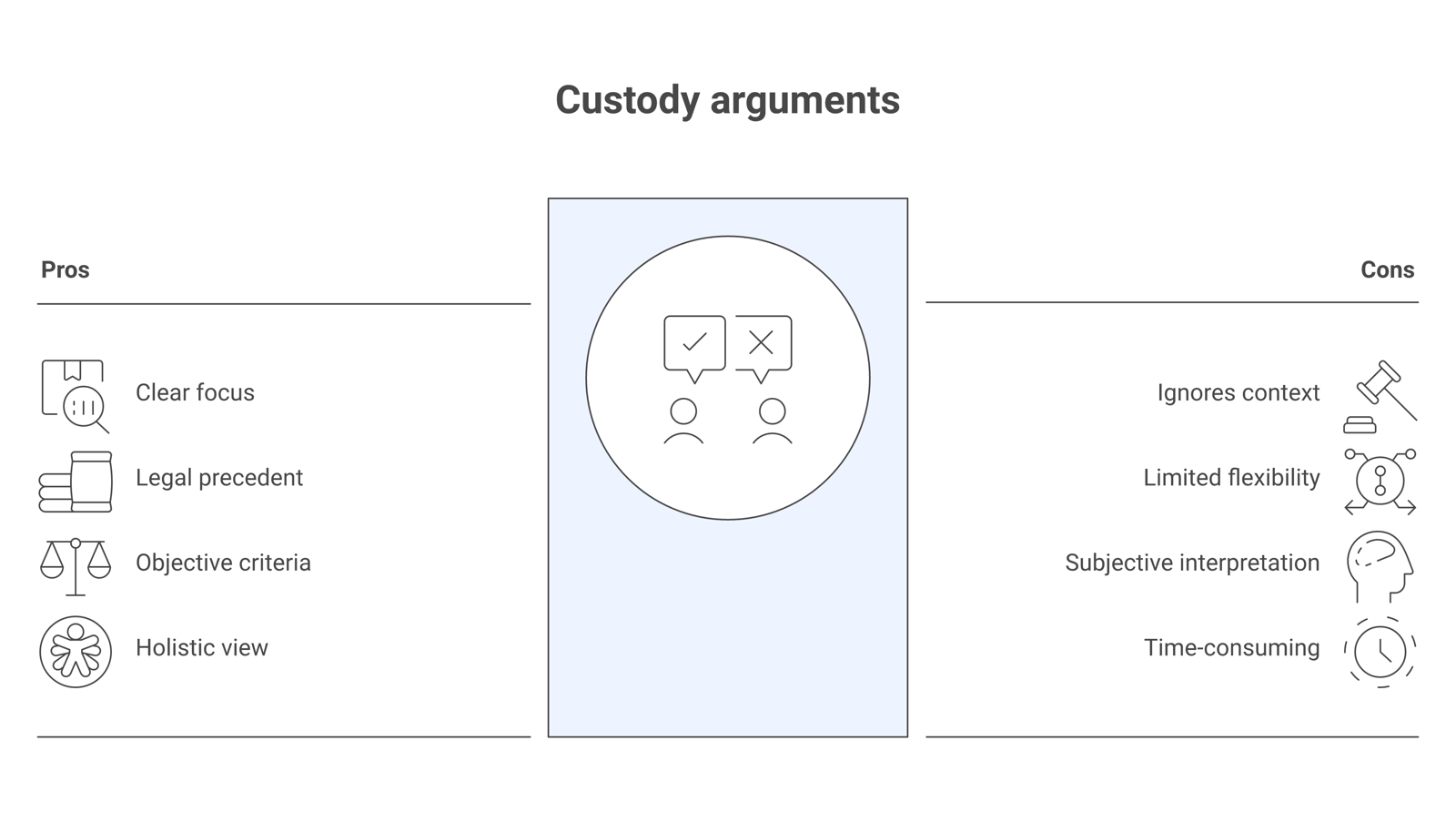
Joshi’s broader courtroom framework follows the same logic in three steps. Show the court that the phenomenon is real and studied. Show that it is occurring in this specific case, through documented behaviors and the child’s response. Show that the child needs timely intervention. None of those steps turns on the label, and each turns on evidence. For the mechanics of building that record, see how to prove parental alienation.
Why emotional abuse is hard to prove in custody cases
Emotional abuse leaves no bruise, and that is exactly the problem. There is no x-ray for denigration, no lab test for coercive control. The conduct often happens in private, between a parent and a child, with no third-party witness. By the time a case reaches court, the record can be one parent’s word against the other’s.
The child’s own response makes proof harder, not easier. Children exposed to coercive control often defend the controlling parent, minimize the pressure, and deny that anything is wrong, much as abused children defend abusive caregivers. A judge who asks the child directly may hear a confident rejection of the targeted parent that sounds like the child’s authentic voice. Untangling a genuine preference from a coached one is difficult, and courts sometimes get it wrong.
Research on appellate custody decisions has documented this gap, although the largest coding effort to date was presented at the Parental Alienation Study Group conference in October 2025 and has not yet been published in a peer-reviewed journal, so its figures are preliminary. It identified recurring error patterns: requiring visible symptoms in the child before intervening, declining to act because the child seemed too entrenched, and treating a targeted parent’s quirks as morally equal to the other parent’s campaign. Each pattern reflects how hard emotional harm is to see and to prove. The attorney-facing analysis of these error patterns sits at how courts handle parental alienation.
How courts vary, and why outcomes stay uncertain
Outcomes vary by jurisdiction, by judge, and by the strength of the record. Some judges have studied parental alienation and emotional abuse closely. Others have had little training, and a case in front of an unprepared bench can turn out very differently from the same case in front of an experienced one.
The same preliminary coding research suggests the framing matters. Courts that approached parental alienation through a child-abuse lens took protective action in nearly all the cases where they found it, while courts that demanded a full symptom picture in the child acted less often. Those figures come from the same unpublished conference presentation and may change on publication. None of this guarantees any particular result. A documented record improves the odds; it does not promise a verdict. Anyone weighing a custody dispute should treat outcomes as uncertain and plan with a licensed attorney accordingly.
What tends to carry weight
Because courts decide on behavior, the most useful work a parent can do is build a clear, contemporaneous factual record rather than a folder of labels. Specific dated incidents, messages in the parties’ own words, statements from neutral third parties, and evidence of the child’s prior positive relationship with the now-rejected parent all give a judge facts to weigh. The goal is to understand and document the pattern, not to manufacture a case or to “win” against the other parent.
Building and presenting that record is its own discipline, and it is where experienced counsel earns their fee. For vetting a lawyer who understands these cases, see how to choose a parental alienation lawyer. For how criminal law does and does not reach this conduct, see is parental alienation illegal. For the broader map of legal options, see the Court silo.
Frequently asked questions
Is emotional abuse considered in child custody cases?
Yes. Most US states decide custody under a best-interests-of-the-child standard, and emotional abuse enters through factors such as the child’s mental and emotional health, the safety of each home, and each parent’s willingness to support the child’s relationship with the other parent. Courts generally act on documented behavior rather than on the label “emotional abuse” itself, and standards vary by jurisdiction.
Is parental alienation a form of emotional abuse?
Many clinicians and researchers treat it that way. Parental alienating behaviors have been described as a form of coercive control and family violence, and some experts frame a court finding of alienation as simultaneously a finding of child psychological abuse. Family courts, though, usually respond to the documented behaviors rather than to the diagnostic term, so the evidence matters more than the label.
How do you prove emotional abuse in a custody case?
Emotional abuse is hard to prove because it leaves no physical evidence and often happens privately. Parents generally rely on a contemporaneous record: dated incidents, messages and emails, statements from neutral witnesses, and evidence of the child’s prior relationship with the rejected parent. A licensed family-law attorney can advise on what evidence a particular court will weigh and how to present it.
Can a parent lose custody for emotional abuse?
It is possible, but never guaranteed. A court can change custody when the record shows a substantial concern for the child’s welfare, and documented emotional abuse can support that. Outcomes depend on the judge, the jurisdiction, and the strength of the evidence. No honest source can promise a custody change in any specific case.
What is the difference between emotional abuse and estrangement?
Justified estrangement is a child’s protective distancing from a parent who has genuinely harmed or frightened them. Alienation is a child’s rejection of a safe, loving parent driven by another adult’s pressure. The two look similar from the outside and must not be conflated. Courts and evaluators try to tell them apart by examining the evidence and the power dynamics, not the accusation alone.
What this page does not do
This page is general information, not legal advice. It does not name any one state’s statutes as if they applied everywhere. It does not tell readers what to file or when to file it. Decisions about custody, evidence, and strategy belong to a licensed attorney working with the real facts of a case. And the page does not frame these tools as weapons. The right use of them is careful documentation oriented to the child’s wellbeing.
For related questions, see how to prove parental alienation, is parental alienation illegal, can you sue for parental alienation, and the full Court silo.
Sources and further reading
- Harman, J. J., Kruk, E., & Hines, D. A. (2018). Parental alienating behaviors: An unacknowledged form of family violence. Psychological Bulletin, 144(12), 1275 to 1299. https://doi.org/10.1037/bul0000175
- American Bar Association, Section of Family Law. americanbar.org/groups/family_law
- American Psychological Association. Divorce and child custody. apa.org/topics/divorce-child-custody
- Cornell Legal Information Institute (Wex). Best interests of the child. law.cornell.edu/wex
If you or your child are in crisis
Free and confidential help is available right now.
- 988 Suicide and Crisis Lifeline. Call or text 988. 988lifeline.org
- Childhelp National Child Abuse Hotline. 1-800-422-4453. childhelp.org
- NAMI HelpLine. 1-800-950-6264. nami.org/help
Last reviewed: 2026-06-06. Author: Alex Buckles (PAC Founder).