

When your ex is keeping your child away from you, the first question is why. If there are genuine safety or abuse concerns, limiting contact can be appropriate and is not alienation. Without them, this is restrictive gatekeeping. Keep showing up, log every denied contact, communicate in writing, and follow your order.
A note on safety
Not every limit on contact is alienation. When a parent restricts time because of genuine, evidence-based safety concerns, that is protective gatekeeping, and it is legitimate. A child who is kept from a parent for real protective reasons is not being alienated. If a child is unsafe with either parent, safety comes first, and concerns belong with the proper authorities.
This page is general education, not legal or clinical advice. It does not address any one state’s law or any single case. A licensed family-law attorney and, where relevant, a licensed clinician can advise on a specific situation.
The short answer
Being kept from your child is one of the most frightening experiences a parent can have. The instinct is to act fast and act big. A steadier first move pays off more: figure out what kind of withholding you are dealing with.
Researchers describe parental gatekeeping as a spectrum, not a single thing. William Austin and colleagues, who shaped much of the gatekeeping research, separate it into facilitative, restrictive, and protective forms. One Families Divided discussion frames the same idea as a continuum from positive and practical, through protective, to negative. The distinction that matters most to you is simple. Protective gatekeeping limits contact because of real safety concerns. Restrictive gatekeeping limits contact without a sound basis. The honest answer to “what do I do” depends on which one this is, so that is where to start.
Restrictive gatekeeping versus protective gatekeeping
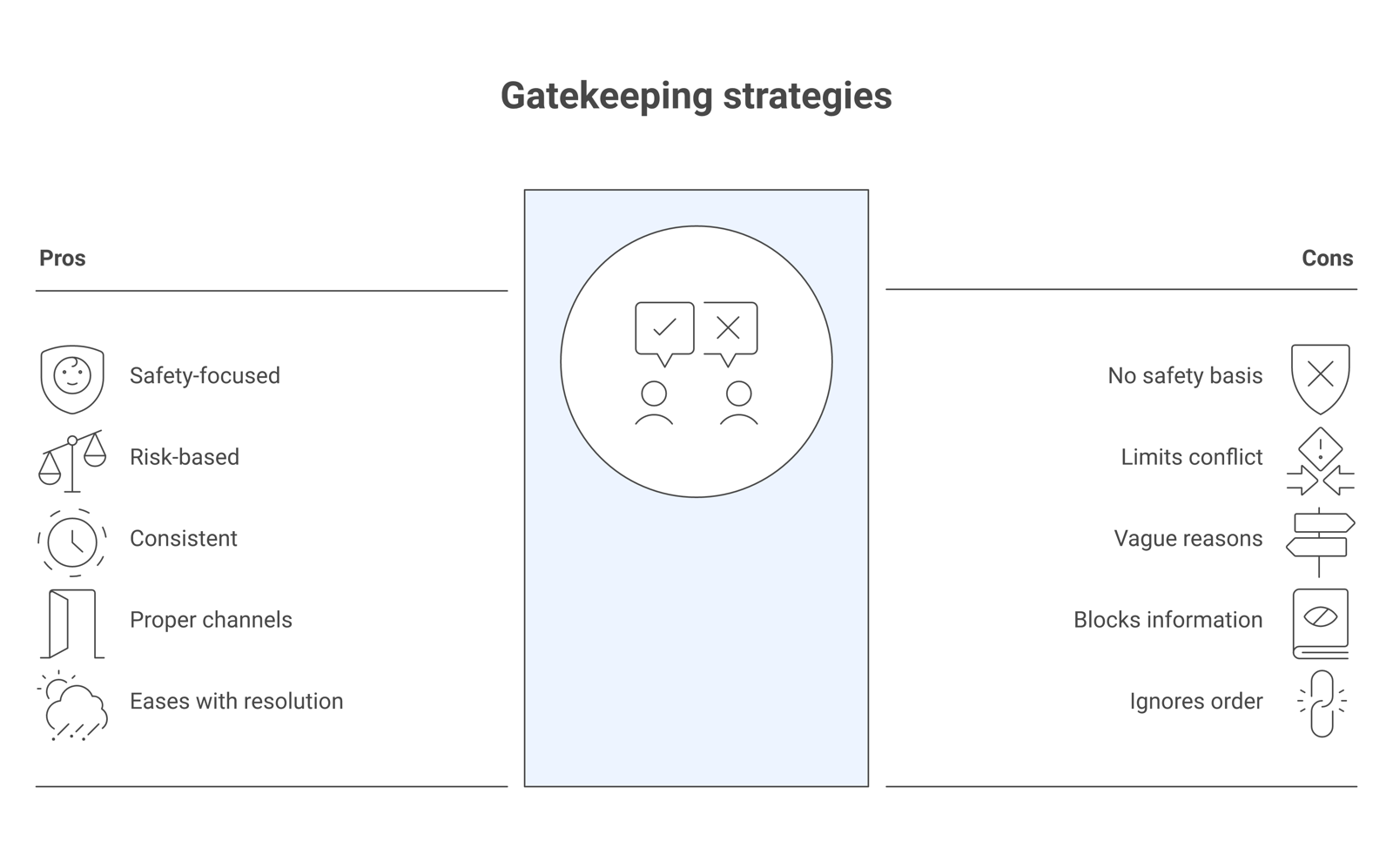
The two can look alike from the outside, because both involve less time with your child. They are not the same underneath. The comparison below lays out the signals that tend to separate them. As with any pattern, weigh the whole picture, not one bad week.
Signs it may be protective gatekeeping
- The limits rest on genuine, documented safety concerns.
- The restriction is roughly proportionate to the risk.
- The concern is specific and stays consistent over time.
- It is raised through proper channels, such as a lawyer, a court, or a child-protection process.
- The aim is to keep the child safe, not to punish the other parent.
- The limits ease as the underlying concern is addressed.
Protective gatekeeping is legitimate. When a child has been genuinely harmed or is at real risk, a parent who limits contact is doing their job. That is justifiable estrangement, as psychologist Joshua Coleman frames it, and it sits in a different category from alienation. The deeper distinction between the two is covered in parental alienation versus estrangement.
Signs it may be restrictive gatekeeping
- There is no sound safety reason for the limits.
- The restrictions track the conflict between the adults, not any real risk to the child.
- The stated reasons shift, stay vague, or do not hold up.
- Calls, school events, and basic information are blocked.
- The existing parenting order is ignored.
- The child is otherwise safe and well in your care.
Restrictive gatekeeping that has no safety basis is one of the recognized alienating behaviors. In Baker’s catalog of strategies, limiting contact and withholding information both appear. If you are seeing a coordinated pattern, the co-parent sabotage guide covers the wider behavior set.
Why unjustified withholding is serious
It helps to name the harm plainly, without inflating it. Unjustified denial of access is not a small administrative problem. Researcher Jennifer Harman and colleagues, in the journal Psychological Bulletin, describe sustained alienating behavior, including the deliberate severing of contact, as a form of coercive control and family violence.
The deeper damage falls on the child. The gatekeeping discussion in the corpus draws on Emotional Security Theory, which finds that a child’s adjustment depends less on whether the parents live apart and more on the conflict the child witnesses and feels. Low, well-managed conflict tends toward resilience. High conflict and fear tend toward harm. One attorney calls gatekeeping “the canary in the coal mine,” an early sign of trouble worth taking seriously. None of that means you should match the withholding with anger. It means the stakes are real, which is exactly why a steady response matters more than a loud one.
Keep showing up, and log every denied contact
Two habits do more good than almost anything else, and you can start both today.
The first is to keep showing up. Arrive for the scheduled exchange even when you expect it to be denied. Send the birthday card. Make the call you are entitled to make. You are not chasing, and you are not making a scene. You are staying present and reliable, which protects the relationship and quietly builds a record of your consistency.
The second is to log every denied contact, calmly and factually. Note the date, the contact that was scheduled, what was actually denied, and the reason you were given. Keep the tone of a flat record, not a complaint. As the corpus puts it, communicate contact requests in writing so the record builds itself. A clean, even log is far more persuasive later than a heated one, and it doubles as a way to see the pattern clearly yourself. The companion piece on a child repeating negative things about a parent describes the same documentation habit for a different problem.
Communicate in writing and calmly
How you communicate is part of the record, so treat every message as if a judge might read it. Use text or a co-parenting app rather than heated phone calls. Keep messages brief, factual, and focused on the child. Make requests, not accusations. “I am ready for our scheduled time at 5 today, please confirm” works better than a paragraph about everything that has gone wrong.
Calm is not weakness here. It is strategy. Because a child is harmed most by the conflict they sense, low observed conflict is genuinely good for them, and it also keeps you on solid ground. The guide on how to communicate with a toxic ex goes deeper into written-message technique. When the other parent tries to provoke a reaction, the wisest move is often the one that gives them nothing to use.
Follow the order, and understand appropriate escalation
One rule sits above the others: do not solve withholding by withholding. Do not stop paying support, and do not keep the child yourself in return. Two wrongs harm the child and damage your standing. Keep following the existing order to the letter, even while the other parent does not.
If the denial continues and is genuinely restrictive, there is a measured path. The corpus describes a document-then-escalate ladder. Build your written record first. Then, often, a lawyer’s letter that gives the other parent a chance to correct course. Then, if needed, a motion to enforce the order, with your record as the backbone. Then, in persistent cases, a motion to modify. The order of those steps matters, and so does the restraint. As one practitioner warns, “if you’re always the first one to run to the courthouse, it’ll backfire.” Courts notice who escalates reflexively and who tries to solve things first.
None of this is about winning. Enforcement exists to protect the child’s right to both parents, and to restore time that was wrongly taken, sometimes through makeup parenting time. It is not a scoreboard against your ex. For the legal frame, see what is visitation interference, and for the enforcement mechanism, see contempt for parental alienation. The American Bar Association’s Section of Family Law publishes general consumer information on how enforcement and makeup time work. A licensed attorney in your area can tell you what actually applies to your order, because this page cannot.
Protect the child from the conflict, and mind your wellbeing
Two final disciplines hold the rest together.
Protect the child from the adult conflict. Do not pass messages through them, quiz them about the other home, or let them feel the weight of the dispute. The research is consistent that what hurts a child is the conflict they absorb, so shielding them from it is one of the most protective things you can do, whatever the other parent does.
Mind your own wellbeing too, because this is a long road and a depleted parent helps no one. Build a small team: a steady friend, a therapist who understands high-conflict separation, and, where needed, an alienation-literate attorney. Randy Flood’s image is apt. A riptide drowns the swimmer who fights it straight on, and rewards the one who stays calm and moves with a plan. The broader Help silo gathers the rest of the active-situation guidance. If the strain ever turns into thoughts of self-harm, treat it as urgent and use the crisis resources below.
Frequently asked questions
What can I do if my ex keeps my child away from me?
First check whether the limits are protective, meaning driven by genuine safety concerns, or restrictive, meaning unjustified. If they are restrictive, keep showing up, log every denied contact, communicate in writing, and follow your existing order. Then, if the denial continues, escalate in measured steps with help from a professional, starting with your written record rather than a rushed court filing.
Is it illegal for my ex to keep my child from me?
It depends on whether a court order exists and what it says. Withholding contact in violation of a valid order can often be addressed through the court, sometimes as visitation interference or contempt. Where genuine safety concerns exist, limiting contact may be appropriate instead. Because the law varies by place, a licensed family-law attorney in your area is the right person to tell you what applies.
What is the difference between restrictive and protective gatekeeping?
Restrictive gatekeeping limits a child’s contact with a parent without a sound safety basis, often tracking the conflict between the adults. Protective gatekeeping limits contact because of genuine, evidence-based safety concerns, in proportion to the risk. Protective gatekeeping is legitimate and is not parental alienation.
How do I document my ex keeping my child away?
Keep a calm, factual log. Record the date, the contact that was scheduled, what was denied, and the reason you were given. Make your requests in writing through text or a co-parenting app so a record builds naturally. Even, unemotional notes are far more useful later than angry ones, and they help you see the pattern clearly.
Should I stop paying support or withhold the child myself?
No. Retaliating with your own withholding harms the child and weakens your position. Keep following the order, keep your record clean, and address the denial through calm written communication and, if necessary, appropriate enforcement. Let the other parent be the one who breaks the order, not you.
What this page does not do
This page does not tell you that every limit on contact is alienation, because protective gatekeeping driven by real safety concerns is legitimate. It does not coach you to override a genuine safety issue. It does not frame enforcement as winning or revenge. And it does not give legal advice or name what to file, because that belongs to a licensed attorney working with your actual order and your state’s law.
For the child-driven version of this problem, see child refusing visitation. For the companion piece, see child repeating negative things about a parent. The full Help silo covers the rest.
Sources and further reading
- Harman, J. J., Kruk, E., & Hines, D. A. (2018). Parental alienating behaviors: An unacknowledged form of family violence. Psychological Bulletin, 144(12), 1275 to 1299. https://doi.org/10.1037/bul0000175
- American Psychological Association. Divorce and child custody. apa.org/topics/divorce-child-custody
- American Bar Association, Section of Family Law. americanbar.org/groups/family_law
- Austin, W. G., and colleagues. Parental gatekeeping research (facilitative, restrictive, and protective gatekeeping). Referenced by name.
If you or your child are in crisis
Free and confidential help is available right now.
- 988 Suicide and Crisis Lifeline. Call or text 988. 988lifeline.org
- Childhelp National Child Abuse Hotline. 1-800-422-4453. childhelp.org
- NAMI HelpLine. 1-800-950-6264. nami.org/help
Last reviewed: 2026-06-07. Author: Alex Buckles (PAC Founder).